Street Interview Ads: A Practical Guide for Brands
By Jordan Winston · · 7 min read
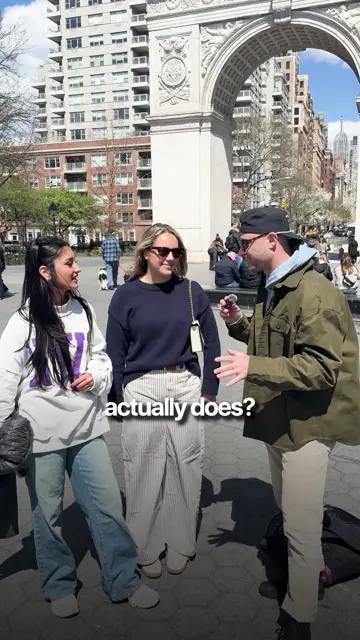
Street interview ads turn conversations with people in real environments into brand content. The format gives you room for opinions, surprises, product reactions, and questions people actually want to answer.
The creative work starts before anyone picks up a microphone.
You need a reason for someone to stop, a question worth answering, and a clear connection between that conversation and your product. Then you need an edit that makes sense to someone who has never heard of your company.
Here's how we'd approach it.
What are street interview ads?
Street interview advertising uses an interviewer and participants in a public or real-world setting to create promotional video. A conversation might explore a buying habit, a common frustration, a product category, or an immediate reaction to trying something. See the format in our street interview examples.
That gives brands several possible stories: someone explaining the problem in their own words, testing an assumption, comparing preferences, or discovering a product.
For a first campaign, pick one of those stories. Trying to squeeze the entire brand presentation into one interaction gives the interviewer too much to manage and the viewer too much to process.
Start with a problem your audience recognizes
Before writing questions, finish this sentence:
“The person we want to reach is frustrated by ______.”
Be specific. “They want convenience” could describe almost anything. “They get home late and end up eating whatever takes the least effort” gives you a situation to explore.
From there, ask what you want to learn. What do people currently do? What have they tried? What makes the problem annoying? Which trade-off are they making?
Those answers give your street interview marketing a purpose. They also help you judge whether a funny moment belongs in the final video.
Write questions that invite a story
A useful question is easy to understand and gives someone room to say something specific.
Here are a few original starting points to adapt to the product:
| Product category | Opening question | Follow-up |
|---|---|---|
| Snacks | What's the snack you buy for other people and end up eating yourself? | What makes that one impossible to leave alone? |
| Everyday essentials | What's one thing you refuse to buy the cheap version of? | What happened the last time you tried? |
| Travel accessories | What do you always pack and never use? | What do you wish you'd brought instead? |
| Food or meal products | What's your dinner plan when you get home exhausted? | Which part of cooking are you trying to avoid? |
Snacks
Opening question
What's the snack you buy for other people and end up eating yourself?
Follow-up
What makes that one impossible to leave alone?
Everyday essentials
Opening question
What's one thing you refuse to buy the cheap version of?
Follow-up
What happened the last time you tried?
Travel accessories
Opening question
What do you always pack and never use?
Follow-up
What do you wish you'd brought instead?
Food or meal products
Opening question
What's your dinner plan when you get home exhausted?
Follow-up
Which part of cooking are you trying to avoid?
These are creative prompts, not reports of completed campaigns. The right choice depends on the brand and the people you're trying to reach.
Give the interviewer follow-ups they can use when an answer gets interesting. “Tell me what happened” can open up a story. “Why?” can reveal a useful objection. A thoughtful follow-up often matters more than another question on the list.
Make the product part of the conversation
Plan the connection between the opening and the product before the shoot.
If someone describes a problem your product addresses, the interviewer has a reason to introduce it. If the opening is a preference question, the next moment could involve a relevant sample or comparison.
Keep the interaction honest. Someone trying a product for the first time can describe that first impression. Their reaction doesn't establish what happens after weeks of use.
Be equally careful in the edit: preserve what the person meant. An enthusiastic response to a taste test shouldn't become a claim about an unrelated benefit.
Plan production around usable moments
For man-on-the-street interviews, the location influences who you meet, the sound you capture, and what feels natural to discuss.
A crowded place can look exciting while making dialogue hard to hear. A quieter spot can produce clear audio but attract the wrong participants. Scout for both the visual setting and the conversation you need.
Make the shoot brief practical: target participant, opening question, follow-ups, product moment, and shots the editor will need. Capture clear product footage as well as the interaction so the final video can explain what the viewer is seeing.
This is where social media video production benefits from planning the edit in advance. The crew should know what story they are collecting.
Give each edit a clear job
One cut might introduce the problem. Another might focus on a product reaction. Another might answer an objection.
Label those angles and keep track of what changed. If you change the opening, product explanation, duration, and call to action together, it becomes harder to learn which decision mattered.
Watch each cut as a new viewer. Can you understand the premise quickly? Can you hear the answer? Is the product clear? Does the ending tell you what to do next?
Keep moments that advance the story, including pauses or reactions that carry meaning. Remove explanation that the audience doesn't need.
Measure the result you wanted
Choose the campaign's goal before evaluating the footage.
For audience growth, look at relevant engagement, profile visits, and whether people return. For a campaign intended to generate inquiries or sales, follow the path beyond the view: website visits, inquiries, and the outcomes those inquiries produce.
Compare creative under reasonably similar conditions. Different audiences, offers, placements, and landing pages can all affect the result. A large view count alone doesn't tell you whether a video helped the business.
Keep a simple record of the question, product moment, edit, audience, and outcome. That record makes the next brief more useful.
What should you ask a street interview agency?
Ask how it develops questions for your audience, connects the product to the premise, and turns footage into different creative angles. Request examples relevant to the type of story you want to tell.
Also clarify what the project includes: concept development, production, editing, usage arrangements, and revisions. A clear scope lets you compare proposals and plan the campaign around the assets you'll receive.
Not Your Dad's Media produces street interviews, challenge videos, and experiential product integrations. Explore our video production formats, watch our client work, or book a call to talk through a concept for your brand.
Want a street interview concept for your brand?
See our street interview work or talk it through with Jordan.
Book A Call