How to Plan Street Interview Ads, Step by Step
By Jordan Winston · · Updated · 7 min read
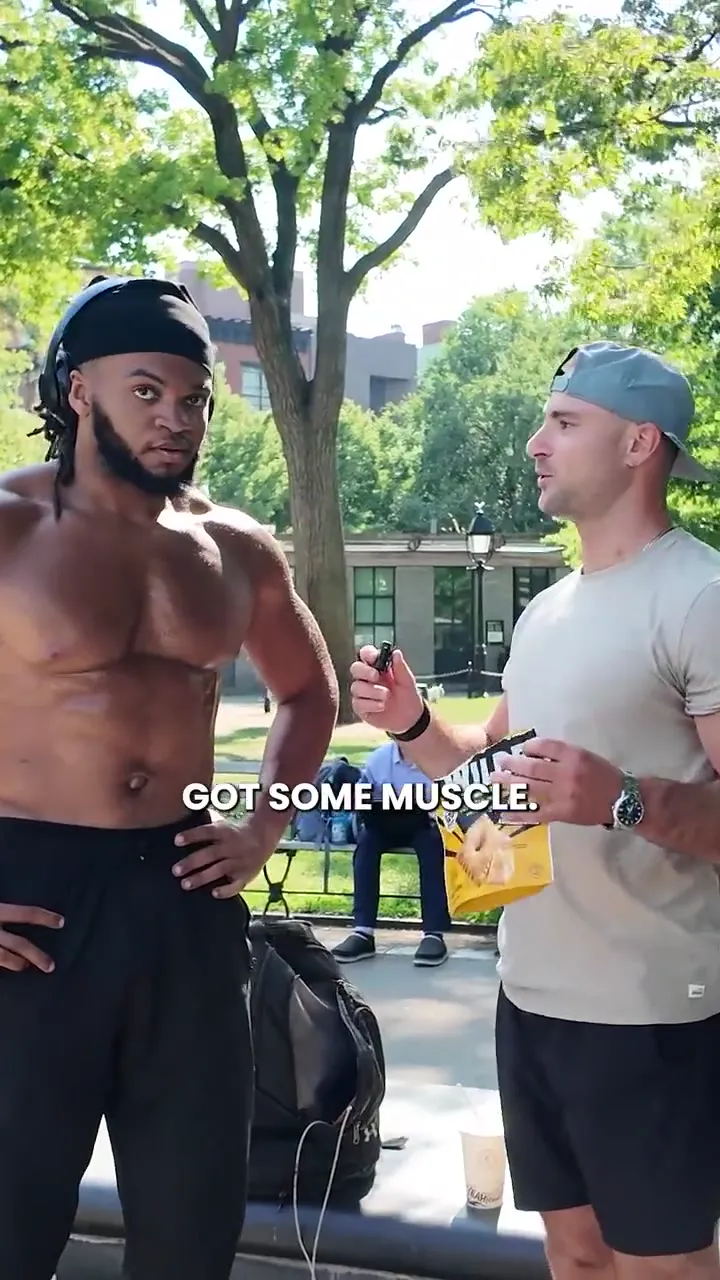
To plan street interview ads, decide what the ad has to prove, write one open question that gets a stranger there on their own, pick a place where your buyer actually walks by, and plan the edit before anyone picks up a mic. Below is the step-by-step plan we use for brand shoots, from brief to the first test, with a template you can copy.
We're an IRL creative agency. Street interviews are one format we shoot, alongside challenge-style videos, experiential product integrations and founder, expert and POV interviews. If you're still deciding whether the format fits, start with street interview ads for brands or the examples by industry.
Planning street interview ads at a glance
| Step | What you decide | Output |
|---|---|---|
| 1. Goal | What the ad has to prove, and the one metric you'll judge it on | One-sentence objective |
| 2. Brief | Product, the 2–3 messages that must land, where the ads will run | One-page brief |
| 3. Questions | One primary question, 2–3 follow-ups, the product moment | Question sheet |
| 4. Location and timing | Where your buyer actually walks, at what time, plus a backup | Location plan |
| 5. Shoot day | Who does what, releases, product handling, shot list | Shoot-day checklist |
| 6. Edit | Which hooks and cut-downs come out of the footage | Edit plan |
| 7. Test | Hook target, kill rule, what you'll shoot next | Test plan |
1. Goal
What you decide
What the ad has to prove, and the one metric you'll judge it on
Output
One-sentence objective
2. Brief
What you decide
Product, the 2–3 messages that must land, where the ads will run
Output
One-page brief
3. Questions
What you decide
One primary question, 2–3 follow-ups, the product moment
Output
Question sheet
4. Location and timing
What you decide
Where your buyer actually walks, at what time, plus a backup
Output
Location plan
5. Shoot day
What you decide
Who does what, releases, product handling, shot list
Output
Shoot-day checklist
6. Edit
What you decide
Which hooks and cut-downs come out of the footage
Output
Edit plan
7. Test
What you decide
Hook target, kill rule, what you'll shoot next
Output
Test plan
Step 1: Set the goal for your street interview ads
Start with one sentence: "After watching, the viewer should believe ______." Pick one. "This tastes better than what I buy now" and "this app is for people like me" are different shoots.
Then pick how you'll judge it. For paid social that's usually hook rate (3-second views ÷ impressions) first, then clicks and purchases. Choosing now stops a funny clip from winning an argument it shouldn't.
Step 2: Write the street interview ad brief
A good brief fits on one page. Ours asks for:
- The product, and how a stranger should hold, taste or use it on camera.
- The two or three messages that have to land. More than three and none of them will.
- Claims you can and can't make. Only your approved label or legal copy. A stranger's opinion is not a claim, and the edit shouldn't turn it into one.
- Where the ads will run (Meta, TikTok, Reels, Shorts) and the aspect ratios you need.
- Who you want to stop: the buyer, in plain words. "Runners in their 20s," not "health-conscious consumers."
- What's worked before: your best current hook, and the objection you hear most on sales calls or in reviews.
- Deadline, especially if it's a launch or trend window.
Step 3: Plan street interview questions that get real answers
Most street interview ads live or die on one question. It has to be easy to understand in two seconds, impossible to answer with "yes," and lead toward your product without naming it.
Plan the question in three parts:
- The opener: a habit, a guess or an opinion in your category.
- Two or three follow-ups: "Why?", "What happened last time?", "Which one would you pick?"
- The product moment: the point where the interviewer hands it over, shows it or asks them to compare.
Question types we use, with real questions from our shoots:
| Goal | Question type | Real example from our shoots |
|---|---|---|
| Spark curiosity about an ingredient | Habit question | "Have you tried creatine?" (Drink Magna) |
| Win a side-by-side | Comparison | "Gatorade vs. Magna" (Drink Magna) |
| Surface a daily habit | Habit question | "How much protein do you get?" (Everyday Dose) |
| Get the brand into culture | Opinion question | "What was your last Reddit search?" (Reddit) |
| Make a price feel real | Price guess | "How much do you think this trip costs?" (Birthright Israel) |
| Make a cost visible | Count or guess | "How many subscriptions do you have?" |
Spark curiosity about an ingredient
Question type
Habit question
Real example from our shoots
"Have you tried creatine?" (Drink Magna)
Win a side-by-side
Question type
Comparison
Real example from our shoots
"Gatorade vs. Magna" (Drink Magna)
Surface a daily habit
Question type
Habit question
Real example from our shoots
"How much protein do you get?" (Everyday Dose)
Get the brand into culture
Question type
Opinion question
Real example from our shoots
"What was your last Reddit search?" (Reddit)
Make a price feel real
Question type
Price guess
Real example from our shoots
"How much do you think this trip costs?" (Birthright Israel)
Make a cost visible
Question type
Count or guess
Real example from our shoots
"How many subscriptions do you have?"
Say every question out loud to someone who hasn't read the brief. If they need it explained, rewrite it.
Step 4: Pick street interview locations and timing
The location decides who you meet and whether you can hear them. Plan:
- Where your buyer already is. Running routes for a sports drink, parks and campuses for snacks, busy shopping streets for broad consumer products. We film on city streets, at events and at pop-ups.
- Time of day. Foot traffic, light and noise change by the hour. Go when your buyer is out, not when it's convenient.
- A backup spot within walking distance, in case it's too loud, too empty or private property.
- Permissions. Some places need them. We handle permissions on the ground.
Step 5: Run the street interview shoot day
A shoot day goes well when everyone knows what story they're collecting. Your checklist:
- The question sheet, the approved claims and the product, with spares.
- A release for every person who ends up in a paid ad.
- Clear audio first. A great answer you can't hear is unusable.
- The shot list the editor needs: the full question and answer, the reaction, clean product shots and a few wide shots of the location.
- Keep the honest answers, including the negative ones. Real reactions are why the format works.
Step 6: Plan the edit and hook variations
Plan the edit before the shoot, not after. One street session should give you several ads, not one hero cut:
- Each cut gets one job: introduce the problem, show the product reaction, or answer an objection.
- Several openings for each cut, so your media buyer can test which first three seconds earn the stop. Our rate card has a 3 hook variations add-on cut from footage we already have.
- Shorter cut-downs for retargeting.
- Every aspect ratio you need. Our street interview ads come in vertical 9:16 for TikTok, Meta, Reels and Shorts, with two revision rounds per asset.
Step 7: Test your street interview ads, then plan the next shoot
Agree on the rules before launch, not after:
- A hook target and a kill rule. Our usual starting rule is a 35% hook rate by 5,000 impressions. Your account may need a different bar.
- Change one thing at a time. If you change the opening, the length and the CTA together, you won't know which one worked.
- Write down what won: the question, the product moment, the hook. That record is the next brief.
For one beverage client, Drink Magna, our ads hit 32–48% hook rates on Meta versus about 4–6% for the rest of the account. A strong hook gets people watching. It doesn't guarantee a sale on its own, which is why we plan the next round around what the test shows. See hook testing for paid social.
Street interview ad timeline and budget
Most projects go from kickoff to delivered assets in two to three weeks. For a launch or a trend window, there's a 72-hour rush add-on on the rate card.
Street interview ads are $500 per finished video, or $425 on a 6- or 12-month agreement, with a $5,000 monthly minimum across any mix of formats. Organic use is included in perpetuity; paid usage is priced per asset. For sample budgets, see how much street interview ads cost.
When to plan a different IRL format instead
If your product only makes sense once someone uses it, plan an experiential product integration. If you want stakes and an offer built into the ad, plan a challenge-style video, like "for every pull-up this guy can do in a row, you get 1% off." If the story is yours, plan a founder interview. Plenty of brands mix formats in the same month. See why brands mix formats.
How to plan street interview ads: FAQ
How long does it take to plan and shoot street interview ads?
Most projects go from kickoff to delivered assets in two to three weeks. A 72-hour rush add-on is available for time-sensitive launches.
What should a street interview ad brief include?
The product and how it appears on camera, the two or three messages that must land, approved claims, where the ads will run, who you want to stop, your best current hook and your deadline.
How many questions should I plan for a street interview?
One primary question, two or three follow-ups and a planned product moment. More questions usually means weaker answers and a harder edit.
Do street interview ads need a script?
No. Plan the question, the follow-ups and the product moment, then let people answer in their own words. The answers are unscripted; the plan isn't.
How many street interview ads should I plan for a first test?
Enough to compare angles. Five to ten finished videos with several hooks each is a sensible first test. See how much street interview ads cost.
Plan your street interview ads with us
Send us your product, your offer and the objection you hear most. We'll come back with the questions we'd ask on the street. See street interview ads for brands → · Rate card · Book a call
Want a street interview concept for your brand?
See our street interview work or talk it through with Jordan.
Book A Call