Man-on-the-Street Marketing: A Brand Buyer’s Guide
By Jordan Winston · · 6 min read
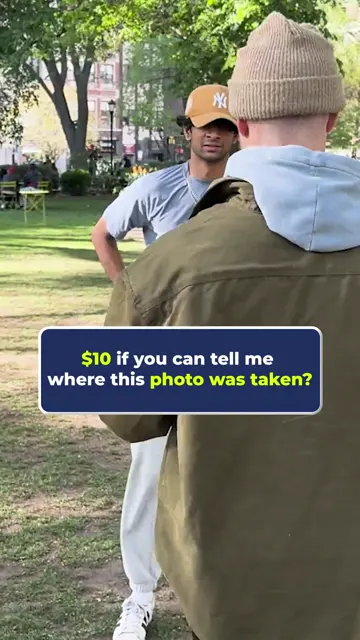
Man-on-the-street marketing looks simple from a finished ad: a mic, a stranger, a reaction, a cut.
That simplicity is the product. The work is not.
This guide is for brand buyers—founders, performance marketers, and creative leads—who need to decide whether man-on-the-street (MOTS) creative belongs in their paid social system, what “good” looks like before they book a shoot, and how to brief a production partner without turning the format back into scripted UGC.
At Not Your Dad’s Media, MOTS sits inside a broader unscripted / IRL performance creative practice. Street interviews are the classic expression; we also produce adjacent formats when one shape starts to fatigue. Start here for the MOTS lane: Man-On-The-Street Marketing and Street Interview Video Ads.
What man-on-the-street marketing is
Man-on-the-street marketing is a video advertising approach that captures unscripted interviews or reactions with people in public or real-world environments, then edits those moments into creative for organic and—more often—paid social.
It is sometimes discussed alongside terms like street interview ads, vox pops, or “authentic generated content.” Different agencies brand the category differently. The operational idea is consistent:
- Real people, not actors hired to love the product
- Prompts and questions instead of line-read scripts
- Environments the audience recognizes as real
- Edits built for feed behavior (hooks, pacing, captions, aspect ratios)
If you want a planning checklist for questions and product bridges, pair this page with Street Interview Ads: A Practical Guide for Brands.
What it is not
- Not influencer marketing. You are not renting a creator’s audience.
- Not classic UGC. Creator UGC is usually a paid performance of a brief. MOTS is a public intercept. Compare formats in detail in Street Interviews vs UGC vs AI-UGC and on the UGC alternative page.
- Not “gotcha journalism.” The goal is brand creative and learning, not humiliating participants.
- Not a guarantee of virality. Treat it as a performance creative input—especially when packaged with multiple hooks—not as a lottery ticket.
Why brands buy it now
Three buyer pressures show up repeatedly in briefs:
- Creative fatigue on scripted UGC patterns
- Need for cold-traffic trust when the brand is unknown in the first three seconds
- Need for testable volume without twelve separate creator rounds
MOTS helps when the sale depends on a human reaction that is hard to fake: taste, surprise, confusion turning into interest, a price guess, an objection said out loud. That is why CPG and consumable brands lean on the format—see video ads for CPG and food brands.
The production system (what you are actually buying)
A serious MOTS engagement is not “someone with a camera downtown.” Buyers should expect a system:
1) Strategy and question design. You share product, positioning, must-hit messages, and constraints. The production team designs questions and premises that invite specific stories—not yes/no dead ends. Follow-ups matter as much as openers.
2) Location and audience fit. High foot traffic is not enough. The environment should match who you are trying to reach: city streets, events, pop-ups, parks, campuses, category-relevant scenes. Wrong location = wrong reactions, even with great editing.
3) On-the-ground production. Filming, reading people quickly, handling permissions, managing product, protecting audio, and knowing when a moment is worth following. Most conversations will not make the cut. That is normal. The value is in selection.
4) Edit, hooks, and packaging. Finished ads are not raw selects. Expect vertical 9:16 exports for TikTok, Meta, Reels, and Shorts; hook variations; shorter cut-downs for retargeting; optional raw selects. Hook packaging is covered on hook testing for paid social.
5) Feedback loop. You or your media buyer run spend, share what wins, and the next shoot doubles down. MOTS works best as a repeatable content engine, not a one-off stunt.
Most projects deliver in about two to three weeks from kickoff. Confirm scope on a call.
A practical framework for high-performing MOTS creative
Use this as a buyer checklist—not as a mystical formula:
- Pattern interrupt — visual or verbal opening that does not look like a polished brand spot
- Public intercept — a real person in an uncontrolled setting
- Open-ended prompt — curiosity over yes/no
- Authentic reaction — leave room for processing, surprise, disagreement
- Contextual product integration — introduce the product when the conversation earns it
- Social proof loop — edit may stack multiple reactions when it strengthens belief
For question examples by category (snacks, essentials, food), see the tables in the street interview ads guide.
Who MOTS is best for
Strong fit:
- CPG, snack, food, and beverage brands
- Supplements, health, and beauty
- Consumer apps launching or explaining a category
- DTC brands already spending on paid social
Weaker fit (or needs a different format first):
- Brands that must land a precise regulated claim in every cut
- Products that cannot be shown, sampled, or discussed safely in public
- Teams expecting one hero film to replace a testing program
When the story needs a different shape, look at POV interviews, challenge-style videos, experiential product integrations, or founder / expert interviews.
What you should put in the brief
Send:
- Product samples / shipping plan
- Positioning and the 2–3 messages that must land
- Audience notes (who you want on camera demographically/psychographically—without illegal targeting requests)
- Claims guidance and anything legal must avoid
- References to ads you like and why (hook, pacing, tone)—not just “make it viral”
- Where creative will run (Meta, TikTok, etc.) and whether you need whitelisting-ready exports
Ask your partner:
- Who designs questions?
- How are releases/permissions handled?
- How many finished videos and hook variations are in scope?
- What aspect ratios and captioning are included?
- How many revision rounds?
- Usage rights for ads and organic?
- What happens with negative reactions?
Pricing and packaging
Not Your Dad’s Media sells formats à la carte with a monthly minimum (currently stated as $5,000 on the rate card, typically 5–15 videos depending on mix). Street interviews and related formats are priced per finished video; signature productions (challenge, experiential, expert) are higher-touch.
For current per-video pricing, the live rate card and a booked call are the source of truth.
Proof without fake metrics
Public portfolio pages emphasize selected videos rather than published ROAS tables. You can evaluate craft and angle variety here:
- Portfolio index
- Everyday Dose
- Wilde Chips and other CPG work across the portfolio
- Autopilot
When client-approved performance numbers exist, they belong on case studies—not as invented claims inside a guide.
FAQ
Where do you film?
High-foot-traffic, culturally relevant places—city streets, events, pop-ups, and environments aligned to the audience. (MOTS service FAQ)
Do we ship product?
Yes—typically you send product and messaging; production handles the rest of the street workflow.
Do you run media?
Creative production is the core offer; you or your media buyer run spend and share winners so the next cycle can scale what worked. (Hook testing FAQ)
How is this different from hiring a local creator to “do streets”?
End-to-end MOTS includes question design, logistics, permissions practice, volume of intercepts, and an edit built for testing—not a single creator’s weekend footage.
You bring the product. We bring the people, the questions, and the edit.
Want a street interview concept for your brand?
See our street interview work or talk it through with Jordan.
Book A Call